
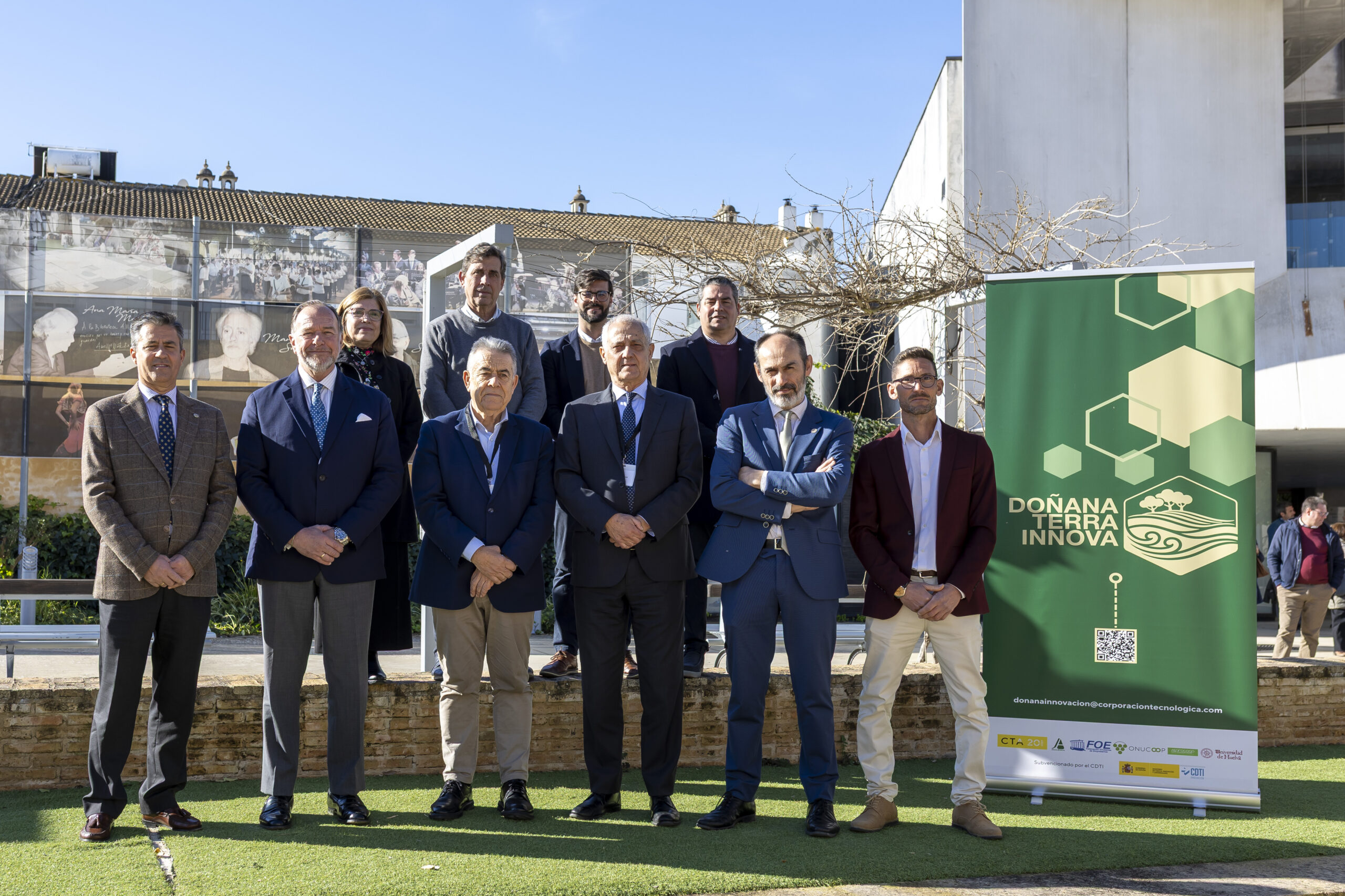
The University of Huelva has presented the Doñana Initiative, a new initiative aimed at promoting innovation, knowledge transfer, and collaboration among institutions, companies, and social stakeholders in the Doñana area.
This initiative is part of the Doñana Terra Innova project, funded by the Spanish Ministry through the CDTI, and seeks to transform the territory into a leading hub for circular economy, biotechnology, and sustainability.
María Reyes Sánchez, Vice-Rector for Knowledge Transfer and Territorial Development, explained that the chair is part of a set of instruments included in the project, which also comprises a Living Lab and an Innovation Observatory. In the case of the University of Huelva, the Doñana Chair will serve as the specific mechanism to foster the participation of the academic community in the project.
The chair will be managed by a technician from the University of Huelva assigned to the Doñana Terra Innova project and will have a parity-based advisory board, whose composition will be broader than that of other university chairs. Its aim is to bring together all stakeholders interested in the development of the Doñana area, including companies, local councils, institutions, and social actors, both from the province of Huelva and from other territories linked to the natural space.
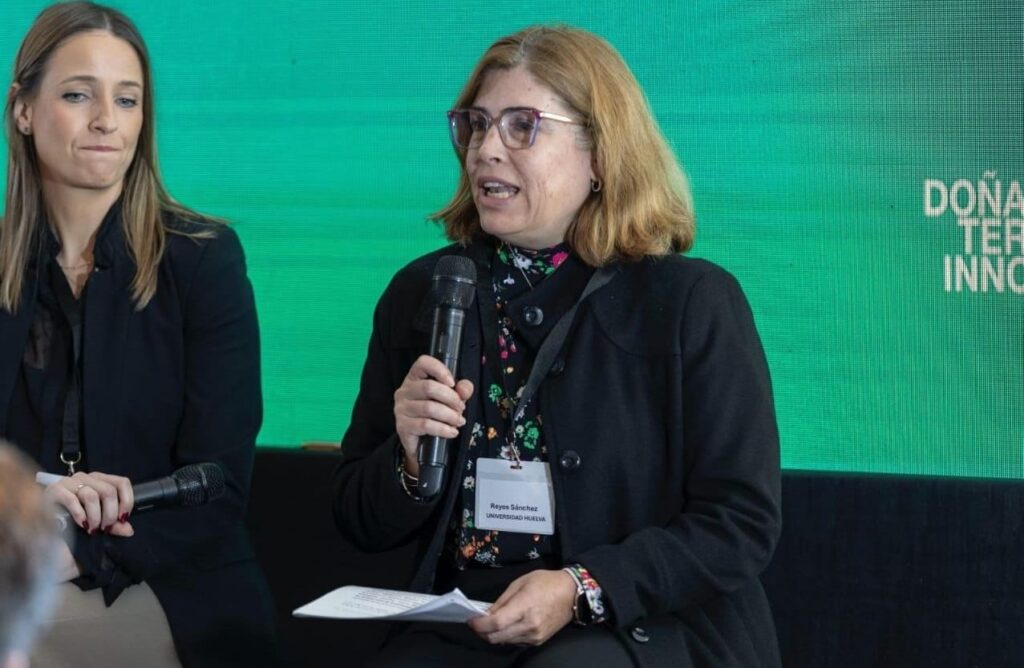
According to the Vice-Rector, the aim is to create a shared forum where all these stakeholders can exchange needs, proposals, and initiatives.
“We want to ensure that no idea is left out. The Chair’s advisory board will be the space where these proposals are analysed and the actions to be implemented are defined,” she stated.
The initiative also seeks to raise the profile of the University of Huelva within the territory and to consolidate the Doñana area as a benchmark hub in fields such as the circular economy, biotechnology, water reuse, and other areas related to sustainability.
During its first year of operation, the activities of the Chair will be funded through the Doñana Terra Innova project itself. Subsequently, efforts will be made to ensure its continuity through sponsorship and patronage from participating companies and institutions, as well as through participation in public–private calls for knowledge transfer projects promoted by organisations such as CDTI, TRADE, and the Ministry itself.
The Rector of the University of Huelva, José Rodríguez, emphasized that this initiative reflects the institution’s commitment to the generation and transfer of knowledge in service of society. In this regard, he expressed his gratitude for the trust placed by the project consortium, coordinated by CTA, and highlighted the role that the university must play in the socioeconomic development of the region.
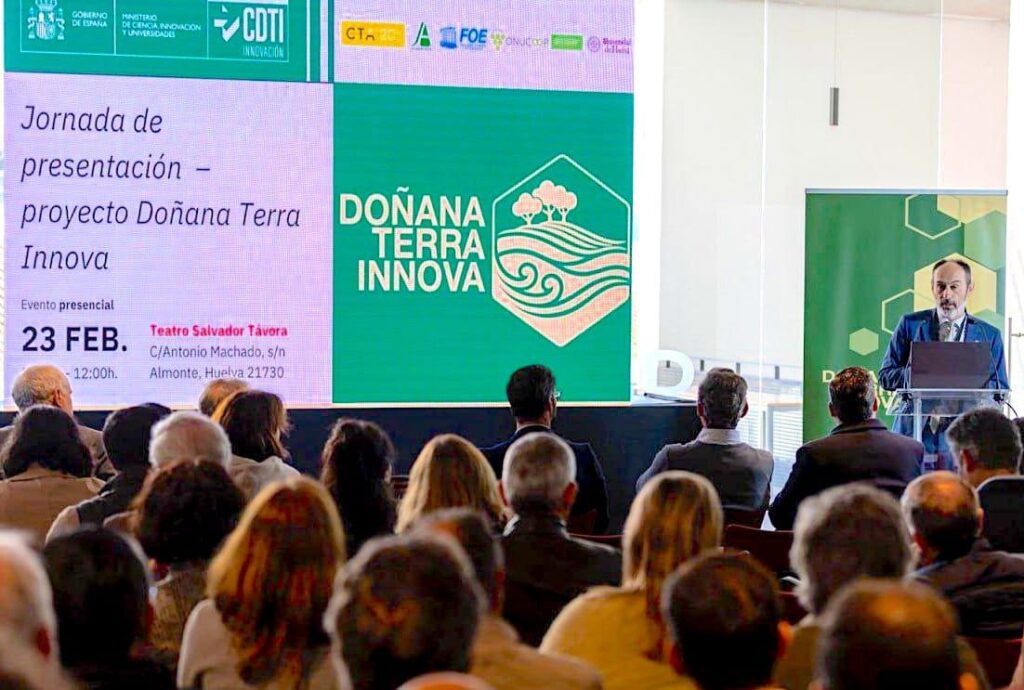
The Doñana Terra Innova project is carried out through a consortium comprising CTA, the University of Huelva, Onubense Federation of Entrepreneurs (FOE) , and the agricultural cooperatives Asaja, Seprocoop, and Onucoop. The initiative aims to promote innovative solutions mainly linked to the agricultural sector, with actions related to water reuse, bioenergy, biofertilization, and precision agriculture. In addition, it incorporates a social dimension, addressing issues such as the living and working conditions of seasonal workers in the Doñana area.
The University of Huelva intends to broaden this approach and include other areas of expertise in which the institution has significant research capacity, such as sustainable mining, green chemistry, and waste valorization, all connected to the development of the circular economy.
The Rector highlighted that the university will contribute the knowledge and experience of numerous research groups to the project, with the aim that ideas developed in laboratories can be transferred to the productive sector and generate real solutions for society. In this context, the Doñana Chair aspires to function as a kind of “one-stop hub” to capture ideas, channel proposals, and promote research, training, and dissemination projects.
Among the initiatives that could be developed within the framework of the Chair is the promotion of innovative projects, such as the development of a digital twin of Doñana, which would improve knowledge and management of the territory.