
José Luis Gallego, Innovation Consultant at CTA, took part in the knowledge-transfer workshop organised by the IFAPA institute on 27 November at its facilities in La Mojonera (Almería). The activity aimed to present the progress and results achieved in the recently completed European ZeroW project, with a particular focus on the work carried out in Systemic Innovation Living Lab 5 (SILL5), coordinated by CTA and also involving partners Grupo La Caña and Multiscan Technologies.
Within the framework of the project, this living lab has focused on the early classification of tomatoes using non-destructive VIS-NIR analysis techniques applied to individual fruits, with the aim of identifying imperfect-looking produce (also known as ugly food) and distinguishing between organic and non-organic tomatoes through innovative technological solutions.
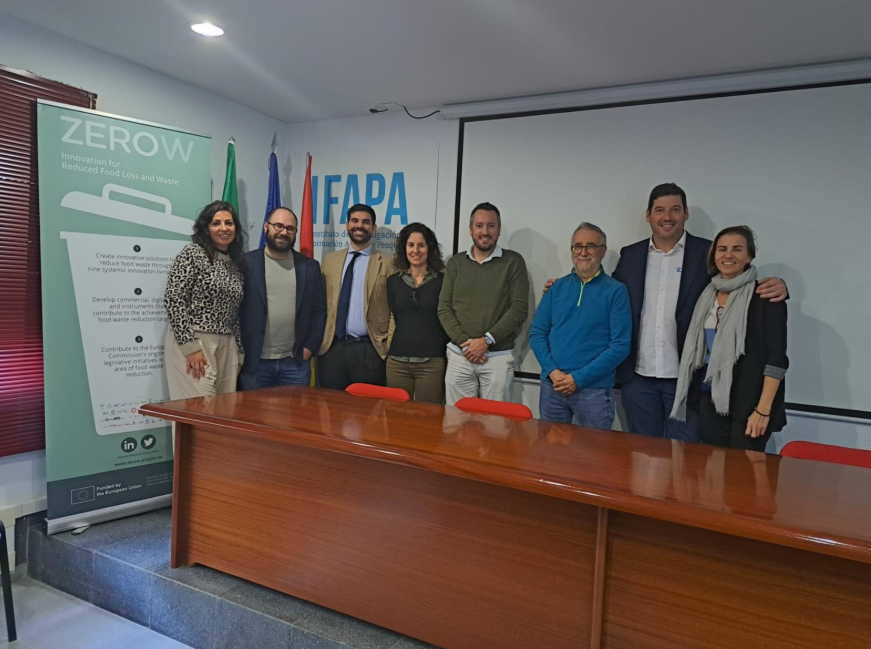
Understanding the challenge and exploring solutions together
During the meeting, which brought together a wide range of stakeholders from the agricultural sector —from the consultancy EsProyecta to the fruit and vegetable marketing companies Unica Group and Agroponiente, as well as the Espigoladors Foundation and the European FOLOU project— participants analysed key issues such as the role of each organisation in managing food waste, the technologies with the greatest potential to reduce it, future needs in prevention and management, and the priority actions that should be implemented without delay to boost the recovery of fruits and vegetables, reduce environmental impact, and ensure fairer access to nutritious food.
Finally, experts discussed which actors —producers, distributors, the food service and hospitality sector, consumers and policymakers— have the greatest room for improvement in moving towards a more sustainable system.
Download the ZeroW Policy Briefs at this link.