
The University of Huelva (UHU) has launched the Doñana Chair, a new strategic initiative aimed at promoting innovation, knowledge transfer, and collaboration between institutions, businesses, and social stakeholders in the Doñana area.
The initiative is part of the Doñana Terra Innova project, funded by the Ministry through CDTI, with the goal of transforming this region into a benchmark hub for circular economy, biotechnology, and sustainability.
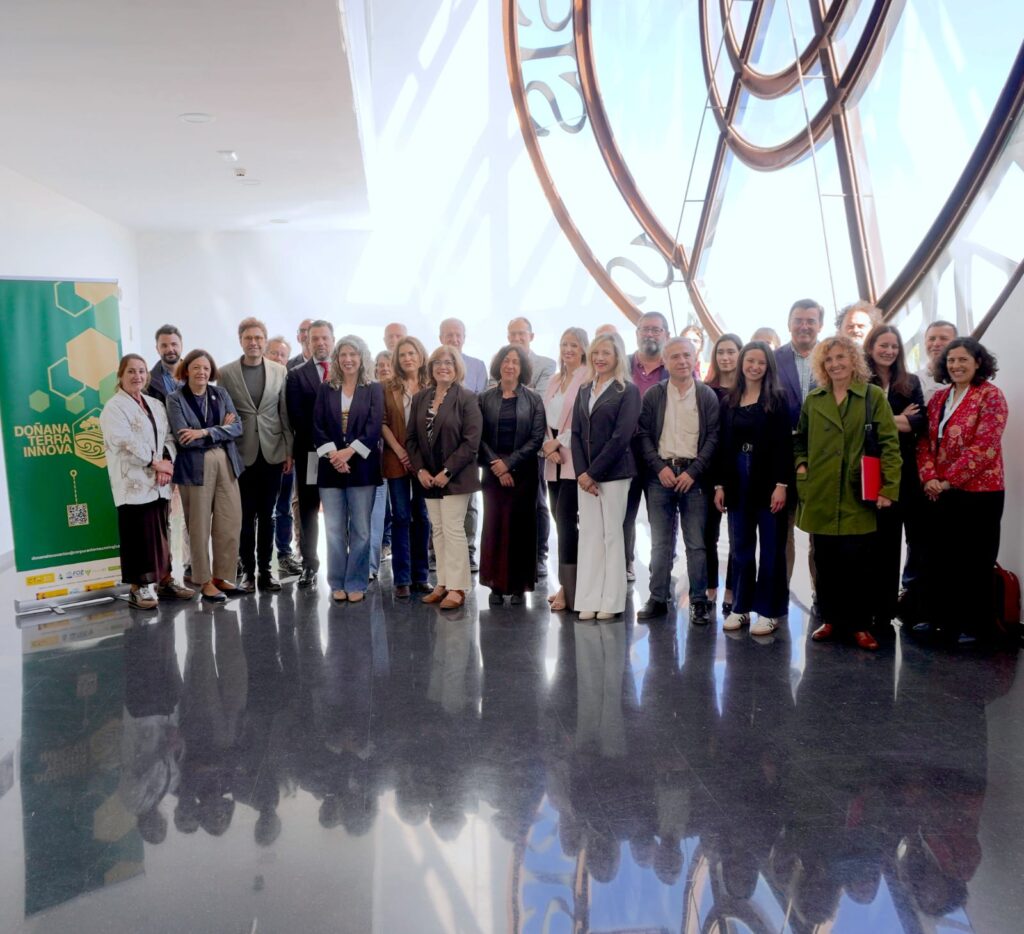
The Vice-Rector for Transfer and Territorial Development at the University of Huelva, María Reyes Sánchez Herrera, highlighted during the event that the Doñana Chair is “one of the three mechanisms designed within the project to implement all the planned initiatives,” and is also the instrument directly coordinated by the University.
In this regard, she emphasized its open and participatory nature: “We want everyone who can contribute to do so, bringing ideas and needs to drive innovation and business forward, while not forgetting the environment or social inclusion.”
The chair is established with an integrative vocation, covering not only the 14 municipalities in the Doñana area, but also a broader region that includes sectors such as agriculture, forestry, industry, tourism, and cultural heritage. Its purpose is to generate new projects that enhance productivity and sustainable development in the territory, aligning local needs with scientific and technological knowledge.
From the business sector, Juan Andrés Reales, CEO of Gabitel, described the chair as a “highly valuable opportunity” to develop projects in the area and strengthen knowledge transfer from the University to the productive fabric. Reales emphasized the need to diversify economic activity in the Doñana region, particularly in light of the current challenges facing the agricultural sector, advocating for new industrial, energy, and social opportunities.
For his part, Daniel Caldentey, representing the Onubense Federation of Entrepreneurs, highlighted the key role of training within the project. The organization will participate with two specialized courses in business management and digitalization, as well as in the implementation of renewable energy systems, which, together with two others promoted by the University, will form a comprehensive training and specialization programme. “The goal is for knowledge to remain in the territory and to prevent the loss of business ideas,” he stated.
From the agri-food sector, Luis Bermúdez, manager of Onucoop, stressed that the chair represents “the beginning of a great opportunity” for the municipalities within the Doñana Biosphere Reserve. In the case of viticulture, he underlined the potential to add value to production through the promotion of the Doñana brand, improving profitability and ensuring the continuity of the crop.
The Rector of the University of Huelva, José Rodríguez, reaffirmed the institution’s commitment to territorial development. “The University is at the service of society. We want to transfer our technological and scientific capabilities to provide real solutions that translate into prosperity,” he stated. He also described the Doñana Chair as a key public-private collaboration tool capable of channeling this knowledge towards the social, municipal, and industrial fabric.
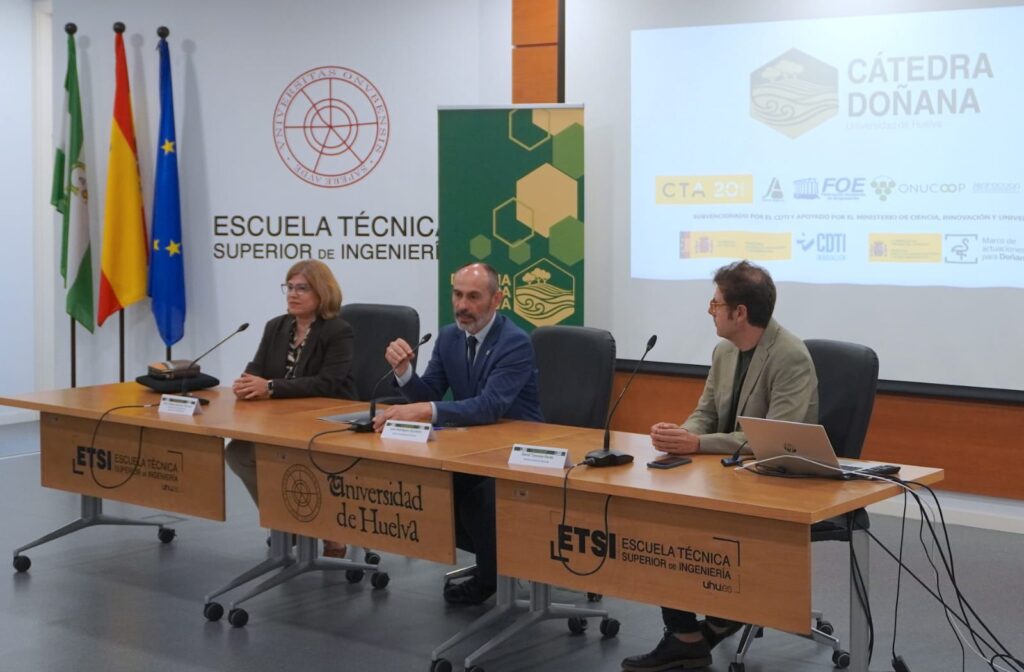
With this initiative, the University of Huelva reinforces its role as a driving agent of sustainable development, committing to a model that combines innovation, cooperation, and local rootedness to ensure the future of the Doñana area.
The Doñana Terra Innova project, funded by the Centre for the Development of Industrial Technology (CDTI) and supported by the Ministry of Science, Innovation and Universities, will develop actions to promote sustainable innovation in the municipalities within the area of influence of the Doñana Natural Space, a UNESCO World Heritage Site and Biosphere Reserve. This project is part of the specific CDTI call “Dynamisation of Doñana” within the Industry Line of the Framework of Actions for Doñana of the Ministry for the Ecological Transition and the Demographic Challenge (MITECO).
The initiative is led by CTA and involves the participation of Asaja-Huelva, the Onubense Federation of Entrepreneurs (FOE), the University of Huelva, and the cooperatives Onucoop and Seprocoop.
The Doñana Terra Innova project, funded by CDTI and supported by the Ministry for the Ecological Transition and the Demographic Challenge and the Ministry of Science, Innovation and Universities, aims to promote, throughout 2026 and 2027, innovative technological projects that contribute to sustainable development in the 14 municipalities surrounding the Doñana Natural Space and Biosphere Reserve.